Start Building Good Habits
By now, your puppy is beginning to settle in. They're learning your routine, figuring out where everything is
and getting more comfortable with their new family.
Now it's time to start turning those everyday moments into good habits.
You don't need hour-long training sessions with a young puppy. In fact, some of the best training happens
in little moments throughout the day.
Waiting before going through a door. Sitting instead of jumping. Coming when called. Letting you handle their feet. Going quietly into their kennel.
You're teaching all day long—even when you don't realize you're training.
🐾 Start as You Mean to Continue
I've said it before, and I'll probably say it again:
What's cute at 10 pounds may not be nearly as cute at 100 pounds.
Don't wait until your puppy is six months old to decide that jumping, biting, pulling, stealing food or ignoring you isn't so cute anymore.
Start setting those expectations now.
Be fair. Be consistent. Show them what you do want instead of only correcting what you don't want.
Keep Training Short and Simple
Young puppies have short attention spans.
A few good minutes of training several times throughout the day can accomplish much more than one long session where both of you end up frustrated.
Work training into normal life:
• Before putting the food bowl down
• Before opening a door
• When putting on the leash
• During play
• Before coming out of the kennel
• When your puppy naturally checks in with you
Those little repetitions add up quickly.
Get Your Puppy to “Report for Work”
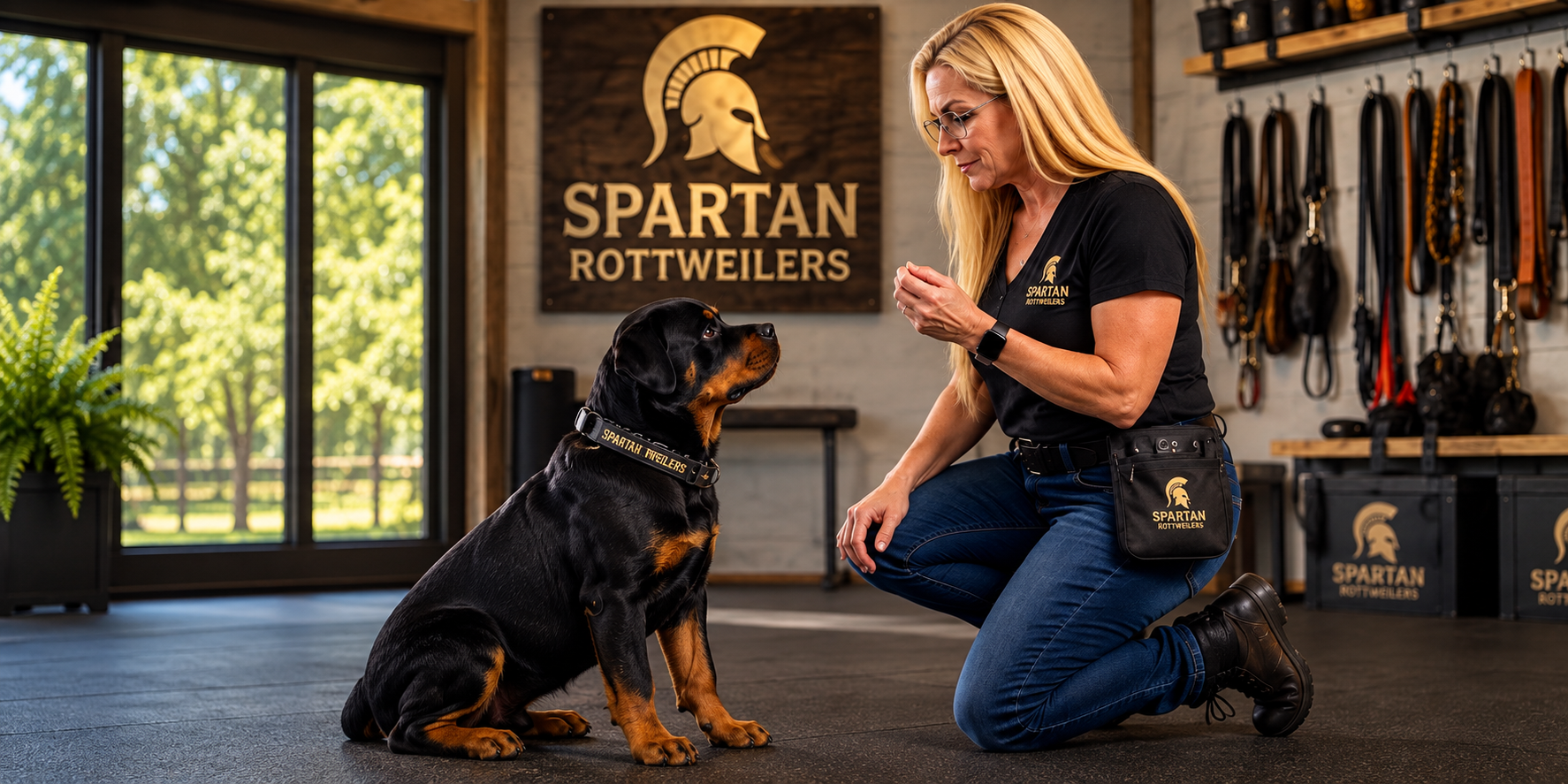
Before I worry about teaching a long list of commands, I want the puppy paying attention to the person
on the other end of the leash.
I call it “reporting for work.”
You want your puppy to learn:
When we're working together, pay attention to me.
Eye contact, checking in with you and learning that you're worth paying attention to
will make everything else easier to teach.
You can practice this throughout the day. Say your puppy's name, get their attention, reward that attention, and then move on. You're building the habit of your puppy checking in with you instead of tuning you out.
Attention comes before commands.
Start Building a GREAT Recall
One of the most important things you can teach your puppy is that coming to you is always a good thing.
Your Spartan puppy has already been introduced to:
“Puppy, puppy, puppy!”
I use this as a special recall from the time they're little, and I want you to continue it at home.
Keep it special. Don't use it all day long. Don't use it when you're angry, and never call your puppy to you with it and then punish them or do something they think is unpleasant.
A couple of times a week, when your puppy isn't expecting it, call:
“Puppy, puppy, puppy!”
When they come running, make it a BIG deal—praise, excitement and something they really love.
We want those three words to mean: RUN TO MY PERSON—something great is about to happen!
Crate Training Is Still Training
The kennel isn't just where your puppy sleeps.
Learning to settle quietly, spend some time alone and be comfortable in a kennel is a life skill.
Your puppy already has a head start because we've begun individual kennel sleeping before they leave me.
Your job is to keep building on it.
Use the kennel for naps, bedtime and short periods of quiet time. We want your puppy to learn
that being alone for a little while is normal—not something to worry about.
Keep Building Those Potty Habits
At this age, potty training is mostly about your consistency.
Regular trips outside, watching your puppy, learning their signals and praising success will get you much farther than getting upset about an accident after it happens.
🖐️ Handle Your Puppy Now
Touch those feet. Look in those ears. Lift those lips. Handle the tail. Brush them. Look between their toes.
Don't wait until something hurts or your veterinarian needs to examine them before introducing this kind of handling.
A few calm minutes regularly can help prepare your puppy for:
Nail trims • Grooming • Veterinary exams • Ear cleaning • Tooth brushing • Everyday care
→ 10-Step Puppy Handling Guide
Socialization Doesn't Mean Meeting Everybody
Socialization isn't about letting every stranger pet your puppy or allowing your puppy to greet every dog they see.
It's about helping your puppy learn that the world contains all kinds of
people, sounds, surfaces, places and situations--and they don't need to worry about them.
Good socialization should build confidence, not overwhelm your puppy.
Manners Matter
Sit, down, stay, leash manners and other commands are important
—but so are the everyday behaviors that make a dog pleasant to live with.
Waiting at doors. Not jumping on people. Leaving something when asked.
Settling down. Walking without dragging you behind them.
Remember, you're raising a Rottweiler.
That adorable puppy is going to become a large, powerful dog, and the habits you're building now will matter later.
You don't need to teach everything this week. Pick a few basics, be consistent and build from there.
Consistency Beats Perfection
You are going to make mistakes.
Your puppy is definitely going to make mistakes.
That's okay.
What matters is that the rules don't change depending on who is home, how tired you are or whether something happens to be cute that day.
Clear rules. Lots of repetition. Praise when they get it right. Redirect when they don't. Then do it again tomorrow.
That's how good habits are built.
You’ve Got the Foundation — Now Keep Building
Your puppy doesn't need to learn everything at once—and neither do you.
As your puppy grows, come back to your Owner Portal whenever you need help with the next stage.
Visit the Training Guides →. / Training Videos →
You've got the foundation. Now it's repetition, consistency and lots of practice.