10-Step Puppy Handling Exercise
Teaching Your Puppy to Accept Handling, Trust Your Direction, and Cooperate
Your Rottweiler is going to spend a lifetime having their paws handled, ears checked, nails trimmed, teeth examined, and collar held. The easier we make these things while they're little, the easier life becomes when they're 100 pounds!
But this exercise is about more than grooming and veterinary care.
Your puppy needs to learn that sometimes you're going to ask them to do something they would rather not do—and that's okay.
Your Spartan puppy has already been introduced to these handling exercises. This isn't something new you're asking them to learn. You're simply continuing the work we've already started.
Practice these 10 exercises regularly. They don't have to be done in order, and you can work them into your everyday time together.
Before You Begin
Choose a quiet time when your puppy isn't overly excited or exhausted. Hold them securely and comfortably, and work through each exercise with calm, confident handling.
What If Your Puppy Wiggles or Protests?
Puppies wiggle. They squirm. Sometimes they complain about an arrangement they didn't personally approve.
If your puppy starts getting wiggly or frustrated, calmly hold them close, speak reassuringly, and give them a moment to settle. Once they're calm, continue the exercise.
Don't turn it into a wrestling match, but don't automatically end the exercise just because your puppy objects.
We don't want puppies learning that wiggling, mouthing, or protesting is the way to make every handling exercise stop.
At the same time, there's no reason to tighten your grip, force an uncomfortable position, or escalate a confrontation. If a puppy shows signs of pain, fear, or escalating aggression, stop that particular handling step and address the cause rather than forcing it.
The goal is to calmly guide your puppy through the exercise and finish on a successful note.
The 10 Handling Exercises
1. Handle Their Ears
Gently rub and lightly tug on the outside of each ear. Lift the ear flap and take a quick look inside.
This prepares your puppy for ear cleaning, grooming, and veterinary examinations.
2. Cover Their Eyes Briefly
Gently place your hand over your puppy's eyes for approximately 3–5 seconds, without pressing on the eyes or covering the nose.
This helps them become accustomed to having their face handled and their eyes examined or cleaned.
3. Open Their Mouth & Check Their Teeth
Gently lift their lips, open their mouth, and look at their teeth and gums. Briefly rub the gums with a clean finger.
This prepares your puppy for toothbrushing, dental examinations, and situations when you need to check inside their mouth.
It's also a good opportunity to become familiar with their teeth as their adult teeth begin coming in.
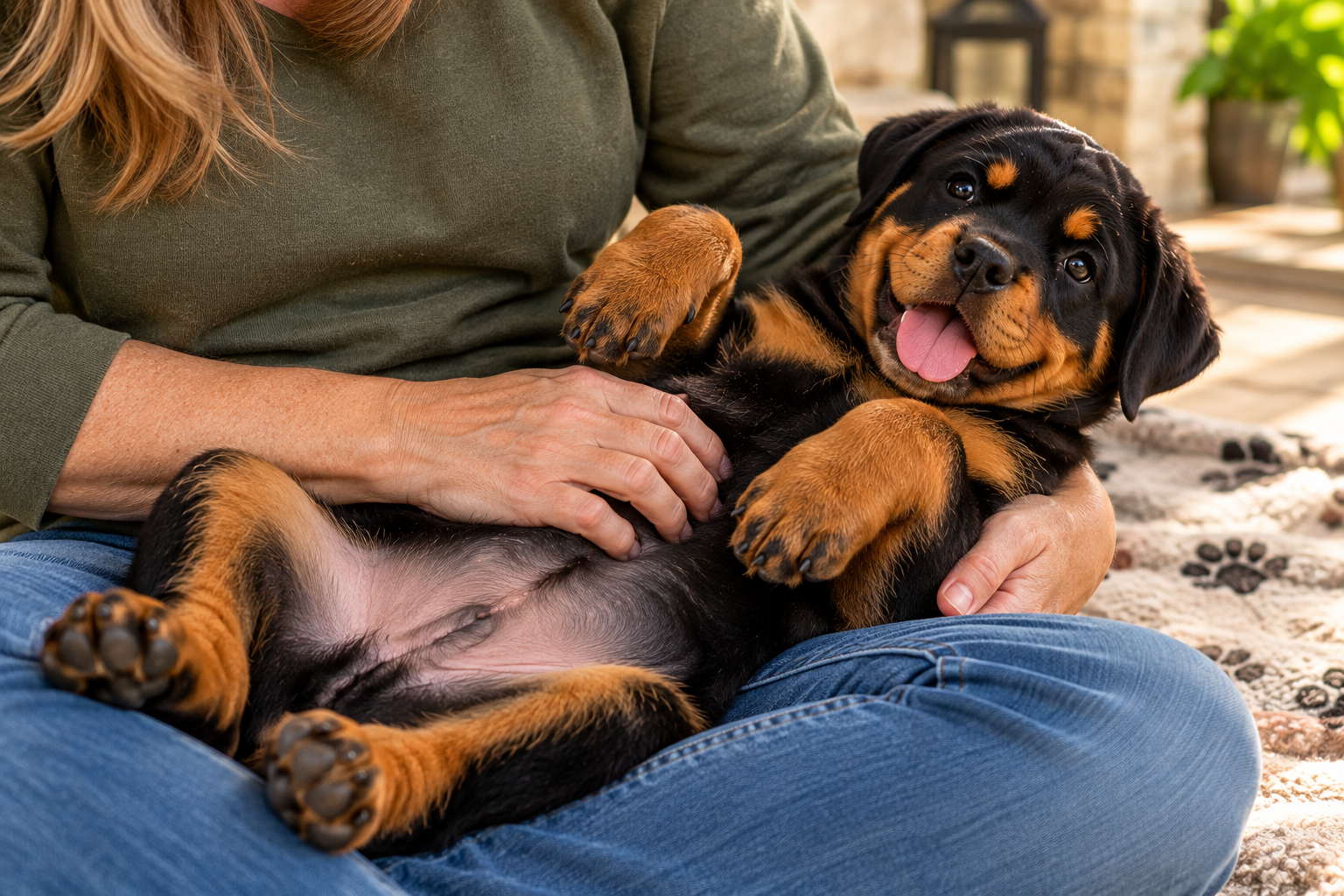
4. Rub Their Belly & Chest
Use gentle, wide circles to rub your puppy's belly and chest.
Practice handling these areas while they're standing, sitting, or lying comfortably. If they enjoy lying on their back, that's fine, too.
The goal is for your puppy to accept having these areas touched and examined.
5. Ruffle Their Back Fur
Run your hand along your puppy's back in both directions, including against the direction of the coat.
You can also practice slightly firmer pats, similar to burping a baby.
This introduces different types of everyday touch so your puppy doesn't become startled or overly sensitive when someone handles them a little differently.
6. Handle Their Tail
Gently hold and move your puppy's tail. If they have a natural tail, run your hand along its length and practice holding it briefly.
If their tail is docked, gently handle the area around the base.
There's no need to twist or pull hard. You're simply getting them accustomed to having this area touched.
7. Massage Between Their Paw Pads
Pick up one paw at a time and gently massage the pads.
Run your fingers between the toes and spread them slightly so you can check for dirt, burrs, or other debris.
This is excellent preparation for grooming, nail trimming, and checking sore feet.
8. Tap the Tips of Their Nails
While holding a paw, gently tap and touch the tips of each nail. Briefly hold individual toes and apply light pressure.
Your Spartan puppy has already experienced regular nail trimming, and continuing these exercises helps keep that handling familiar.
9. Practice Collar Handling
Gently take hold of your puppy's collar and hold it for a moment before releasing.
Practice a little steady pressure without jerking, twisting, or pulling your puppy off balance.
There will be times throughout your dog's life when you need to take hold of their collar, and you don't want them automatically ducking away or fighting that contact.
10. Touch Their Nose
Gently touch the bridge and sides of your puppy's nose with your fingers.
You can also use a soft cloth to briefly wipe around the nose and muzzle.
This helps prepare them for face cleaning and veterinary examinations.
A Few Things to Remember
- You set the routine. Your puppy is learning to accept calm direction and cooperate with everyday handling.
- Stay calm and confident. There's no need to get frustrated or raise your voice.
- If your puppy gets wiggly, help them settle. Hold them close, reassure them, and resume when they're calm.
- Don't make it a wrestling match. Gentle, steady handling is the goal—not overpowering your puppy.
- Recognize genuine distress. Pain, panic, repeated growling, or escalating biting are reasons to stop that particular step and make a safer plan, not to push harder.
- Finish with calm cooperation. End with something manageable that your puppy can successfully do.
- Practice regularly. A few minutes of consistent handling is much better than an occasional long session.
- End with praise and affection. Let your puppy know they've done a good job.
Think About the Dog They'll Become
Someday your Rottweiler may need an ear cleaned, a thorn removed from a paw, medication given, or a veterinarian to examine a sore spot.
That's not the time you want them experiencing this kind of handling for the first time.
We're teaching our puppies that being handled is normal, that their person will sometimes need them to cooperate, and that they can trust that person to remain calm and consistent.
You guide the exercise. Your puppy learns to cooperate. And together, you build the trust that makes handling easier throughout their life.
Start while they're little, practice often, and remember—sometimes we have to train ourselves to stay calm and consistent, too!