Puppy Training by Age
What should you be working on right now?
Your puppy doesn't need to learn everything in the first few weeks. Training happens in stages, and what
you're working on at eight weeks will look quite different from what you're working on at six months.
Here's a general roadmap to help you know what to concentrate on as your puppy grows. These ages aren't deadlines.
Every puppy learns at a different pace, and repetition matters much more than racing through commands.
8–10 Weeks: Building the Foundation
Your starting point
Your puppy has just arrived home. Right now, the priorities are establishing a routine, building trust
and introducing a few basic skills.
What to work on:
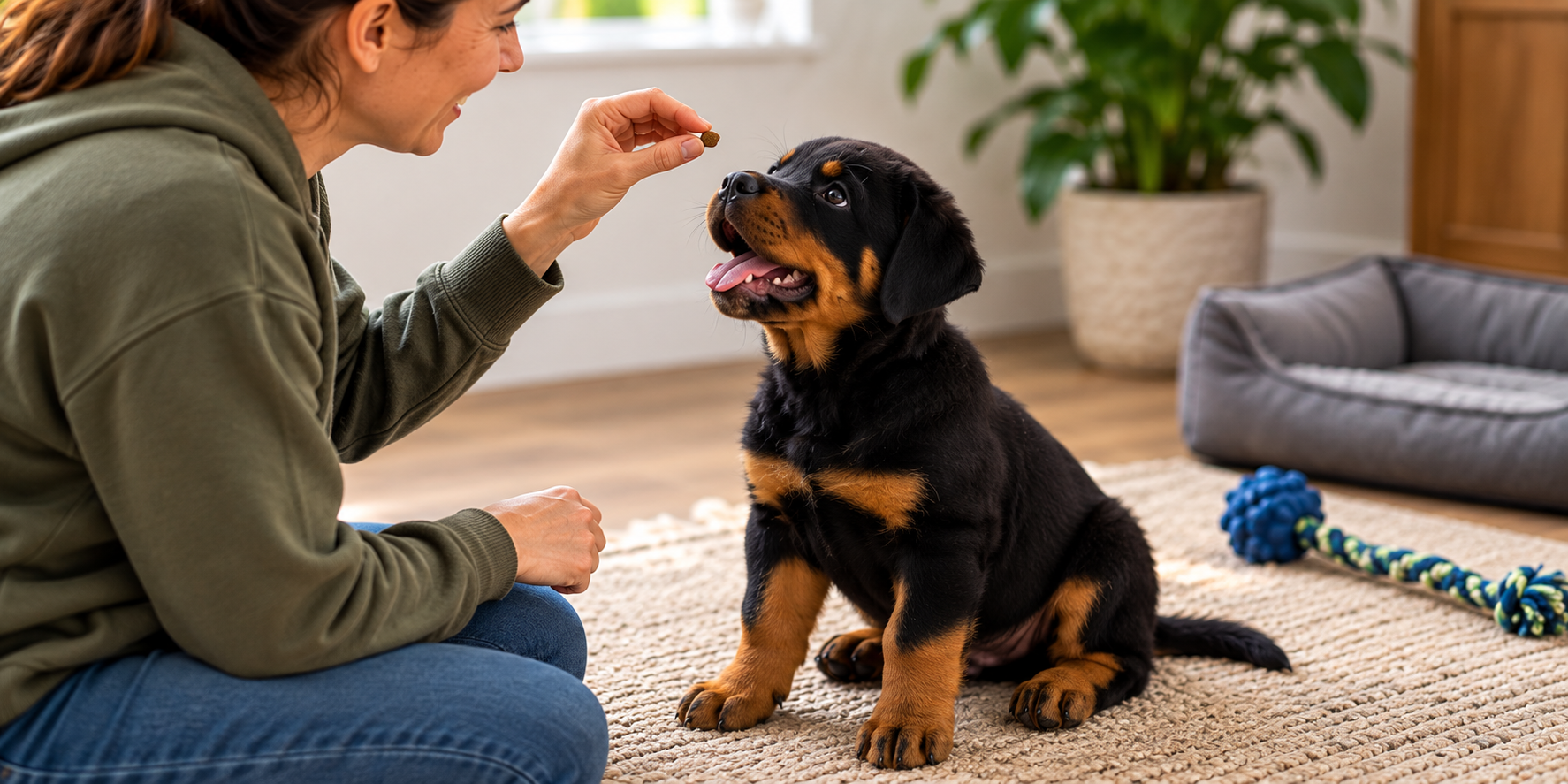
- Name recognition and learning to pay attention to you—what I call reporting for work.
- Regular potty breaks and rewarding successful trips outside.
- Continuing the crate training and sleeping routine we've already started.
- Continue the early leash work your puppy started with me - short, easy sessions focused on
following you and getting comfortable moving together.
- Introducing sit, come and other simple commands.
- Gentle handling of feet, ears and mouth.
- Short, positive experiences with new sounds, people and everyday household activities.
- Help your puppy learn to settle and entertain themselves while you are still nearby. Give them short periods
in their kennel, pen or safe area with an appropriate toy or chew while you remain in the room.
They don't need your attention every minute they're awake.
Learning to Be Comfortable Without Constant Attention
One of the best things you can teach a puppy early is that they can be okay without being attached to you every second.
You don't have to leave the house to start teaching this.
Let your puppy settle in their kennel or puppy area with something appropriate to chew or play with while
you're still in the same room. Go about what you're doing without constantly talking to them, touching them
or entertaining them.
At first, you may only be a few feet away.
As they become comfortable with that, you can start moving around the house, stepping into another room
for short periods and eventually leaving for brief amounts of time.
The goal is for your puppy to learn:
“I can relax by myself, and my person always comes back.”
Keep training sessions short. A few minutes here and there throughout the day accomplishes much more
than trying to teach everything in one sitting.
Remember, your puppy is still a baby. Eating, playing, potty breaks and sleeping are going to occupy most of the day.
10–12 Weeks: Building on What You've Started
By now, your puppy is becoming more comfortable at home. You'll probably also notice a little more confidence
—and perhaps a few opinions!
What to work on:
- Responding to their name even when something interesting is happening.
- Continuing potty and crate routines.
- Practicing sit, down, come and leave it.
- Continuing the leash work we started at six weeks—walking with you, following your movement
and learning that pulling doesn't get them where they want to go.
- Setting firm, consistent boundaries for puppy biting. Redirect to an appropriate toy or chew when it works—but if your puppy keeps coming back for hands, arms, clothing or feet, the interaction stops. Remove yourself or calmly give the puppy a short break to settle. Biting people should never become part of the game.
- Continue building independence. Your puppy should be getting comfortable settling without constant attention, spending short periods with you out of sight, and gradually learning that it's okay when you leave for a little while.
- Continuing positive socialization at your puppy's pace.
Those puppy teeth can be relentless.
Sometimes a toy works. Sometimes it doesn't.
If your puppy is repeatedly coming back at you after you've redirected them, don't keep turning it into
a wrestling match. Stop the interaction.
Many puppies also become much more mouthy when they're overtired or overstimulated, so sometimes what
looks like a puppy who needs more play is actually a puppy who needs to settle down and take a nap.
Don't mistake confidence for reliability. Just because your puppy sat beautifully yesterday doesn't mean
they've mastered the command.
Keep practicing!
3–4 Months: Practicing in the Real World
Your puppy is growing, exploring and becoming increasingly interested in everything around them.
Now we start asking for familiar behaviors in slightly different situations.
What to work on:
- Practicing basic commands in different locations.
- Loose-leash walking with manageable distractions.
- Waiting briefly at doors and before meals.
- Continuing your special “Puppy, puppy, puppy!” recall practice.
- Learning to settle rather than expecting constant entertainment.
- Continuing grooming and handling practice.
- Building confidence through appropriate new experiences.
Remember that puppies don't automatically understand that sit in the kitchen means sit in the backyard.
You'll need to teach familiar skills in new places.
4–6 Months: Consistency Really Matters
Your puppy is getting bigger and stronger. Those adorable little habits you overlooked at ten pounds might
not be nearly as entertaining now!
This is a good time to concentrate on everyday manners.
What to work on:
- Walking without constantly pulling on the leash.
- Waiting at doors and respecting household boundaries.
- Greeting people without jumping.
- Responding to commands around distractions.
- Practicing leave it and drop it.
- Continuing recall practice in securely fenced areas or on an appropriate long line.
- Learning to relax and settle when nothing exciting is happening.
Don't increase the difficulty of every exercise at once. If you're introducing a new distraction,
make the actual task easier.
And don't forget to reward the good behavior your puppy offers without being asked.
6–12 Months: Welcome to Adolescence!
Remember that sweet little puppy who followed you everywhere and listened beautifully?
Well, don't panic if they suddenly seem to have developed selective hearing!
Adolescence can bring increased independence, excitement and some temporary setbacks in training.
What to work on:
- Reinforcing all the commands your puppy already knows.
- Continuing reliable leash manners.
- Practicing calm behavior around people and other dogs.
- Maintaining household rules and routines.
- Strengthening recall without putting your puppy in unsafe situations.
- Increasing training distractions gradually.
- Continuing to reward attention and cooperation.
This isn't the time to abandon your training because your puppy appears to have forgotten everything.
Go back to the basics when necessary, make the exercise easier and build back up.
Remember, you're raising a Rottweiler who will eventually be a large, powerful adult.
Good manners and reliable communication are worth the effort.
Training Doesn't End at One Year
Your Rottweiler will continue maturing well beyond their first birthday. Keep practicing the skills you've taught,
introduce new challenges gradually and make training part of everyday life.
You don't need a perfectly trained puppy at twelve weeks, six months or even their first birthday.
What you want is a puppy who keeps learning and an owner who keeps teaching.
And remember: training isn't just what happens when you've got a leash and treats in your hands.
You're teaching your puppy something every single day!
Where to Go Next
Every topic in this roadmap has its own guide. Return to Puppy Training & Good Habits whenever
you're ready to work on a particular skill.