"No Puppy Biting & Chewing
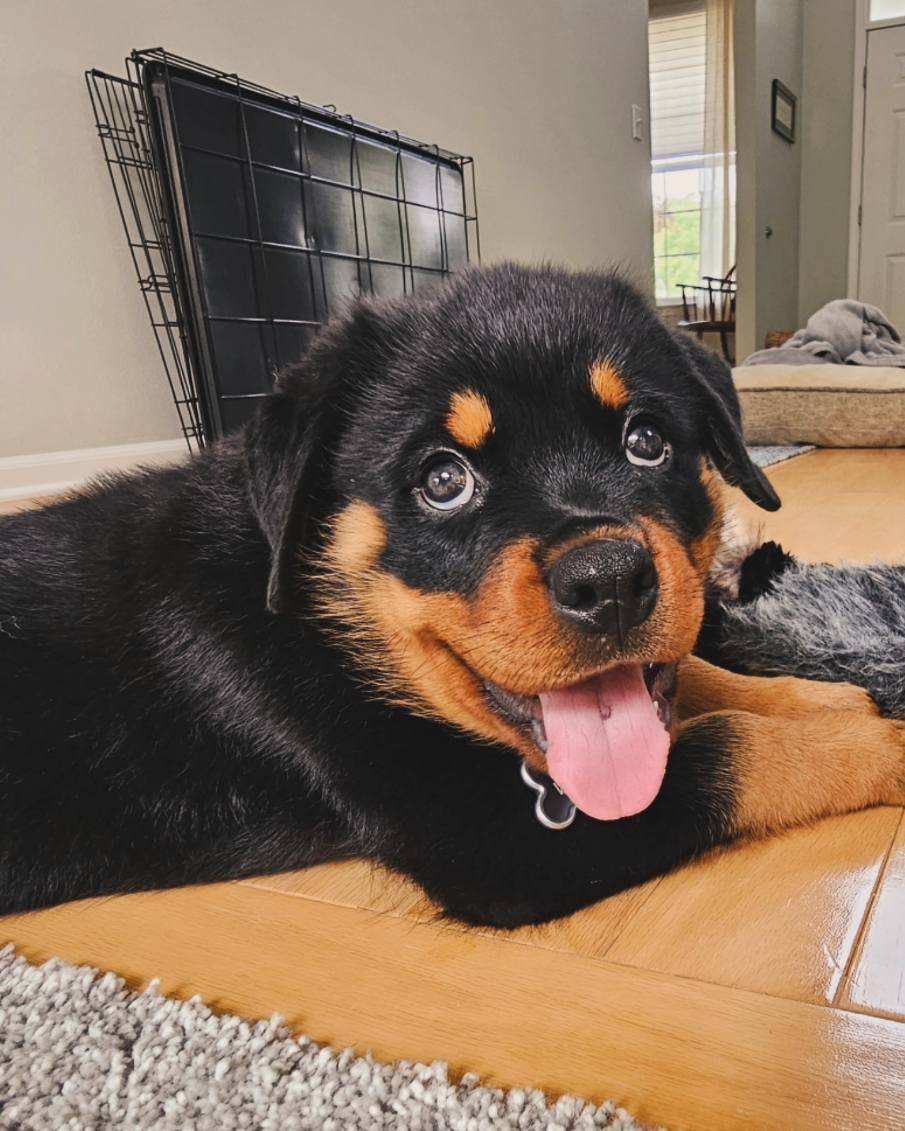
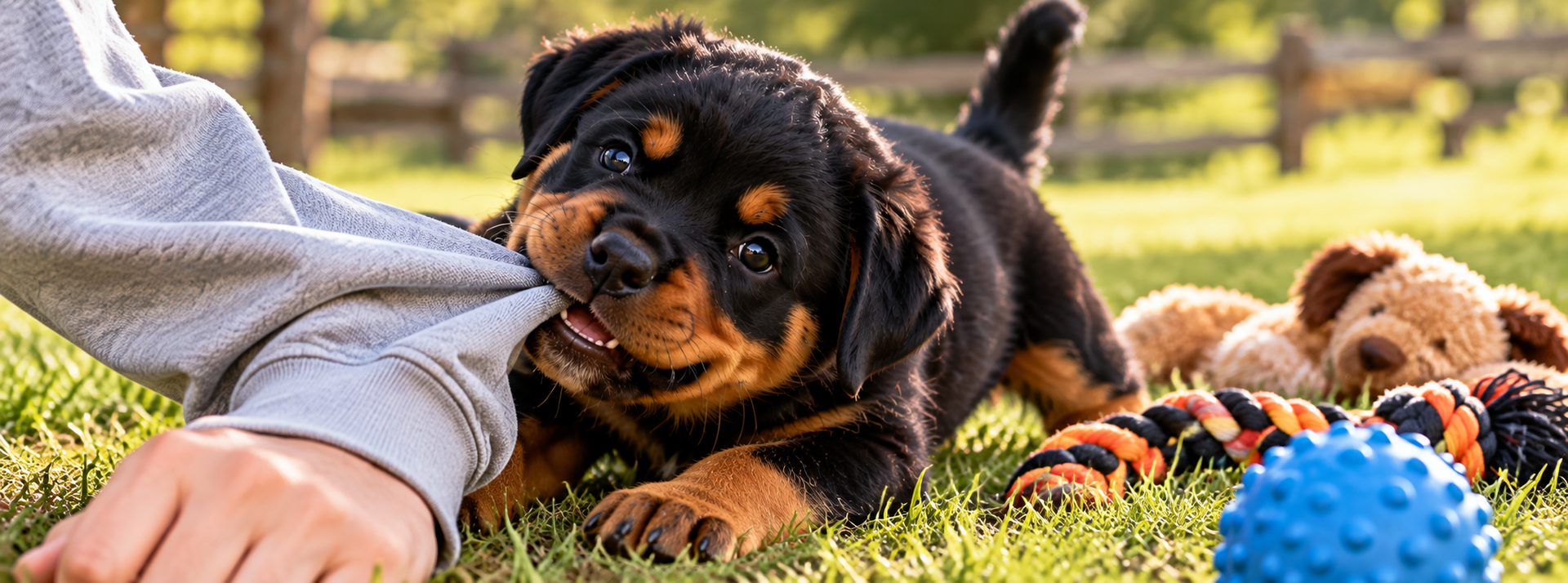
Yes, your sweet little Rottweiler puppy can suddenly turn into a LAND SHARK. 😂
They’re adorable, squishy, full of personality—and also kind of sharky.
If your Rottweiler puppy is biting at hands, pant legs or even little fingers, you’re not alone.
I hear things like:
“He’s sweet, but he keeps biting my kids!”
“She won’t stop nipping during play!”
“Is this normal? Should I be worried?”
The short answer?
Yes, puppy biting is normal.
But no—you shouldn’t simply ignore it.
Your puppy needs you to teach them what they can put their mouth on—and what they can't.
Why Do Puppies Bite?
Puppies use their mouths to explore their world, get attention, play, relieve teething discomfort and learn boundaries.
It's part of being a puppy.
But just because it's normal doesn't mean we allow it to continue.
That little mouth is eventually going to belong to a very powerful adult Rottweiler.
What we allow now matters later.
Watch What a Mother Dog Does
Your puppy began learning boundaries long before coming home with you.
Watch a mother dog interact with her puppies and you'll see that she doesn't respond to every annoying behavior the same way.
She may first avoid or disengage from the puppy.
If the puppy persists, she may move away or physically push the puppy away.
If that doesn't work, she may give a growl or sharp bark as a warning.
And if a puppy continues ignoring those signals, she may give a quick physical correction—a snap or inhibited nip that tells the puppy very clearly:
Enough.
Then it's over.
She doesn't stay angry with the puppy. She doesn't continue correcting after the puppy has stopped. Her communication is immediate and connected to what the puppy just did.
That's dog body language, and puppies understand it.
Obviously, we aren't dogs—and I'm certainly not suggesting you bite your puppy. 😂
But we can use a human version of that same progression.
Give Your Puppy the Human Version
Think of your response in levels.
1. Remove the Fun
If your puppy bites, stop the interaction.
Stop playing. Stop moving your hands around. Stand up or turn away.
That's our version of disengagement.
The puppy begins learning:
“When I put my teeth on people, the fun stops.”
2. Block or Move the Puppy Away
If the puppy keeps coming after your hands, feet or clothing, block them or calmly move them away from your body.
You don't have to turn it into a wrestling match.
You're simply communicating:
“No. You don't get to keep doing that.”
3. Give a Clear Verbal Correction
Use a firm:
“NO!”
or
“No bite!”
You can also use a sharp “Ouch!”
You don't need to yell, scare the puppy or give them a five-minute lecture.
Make the message clear.
And just like we've talked about with other training:
Don't say it fifteen times.
If you've said “No bite,” it needs to mean something.
4. If the Puppy Continues, Follow Through
If the puppy repeatedly comes right back and continues biting after being corrected, I do recommend briefly holding their mouth closed while saying “NO.”
This should be brief and controlled—not squeezing, shaking or hurting the puppy.
Then I hold the puppy calmly until they settle.
I don't immediately put them down following the bad behavior because I don't want them learning:
“If I act badly, I get put down.”
Instead, I want them to calm themselves first.
Once they've settled, we're done.
Correction over. Move on.
Start With the Least Correction That Works
Not every puppy and not every situation requires the same response.
If stopping the interaction gets your point across, great.
If a firm “No bite” stops it, great.
You don't need to escalate a correction when the puppy has already listened.
Think:
Disengage → Block → Correct → Follow through if necessary.
And once the puppy stops, you stop too.
We're teaching—not staying mad.
Redirect the Mouth
Once you've made it clear that biting you isn't acceptable, show your puppy what they are allowed to bite.
Keep appropriate chew toys nearby.
When your puppy goes for a hand, foot or pant leg, correct the behavior and redirect them to something appropriate.
Offer a toy or puppy-safe chew.
Praise them when they choose it.
You can also redirect an overly excited puppy into something they already know, such as Sit or Down, and reward that
behavior.
The lesson is:
You can bite and chew THIS. You cannot bite and chew ME.
Stay Consistent
This is especially important when several people live in the house.
Everyone needs to play by the same rules.
Don't let one person laugh when the puppy grabs their sleeve while someone else is trying to stop the exact same behavior.
Don't encourage rough play that gets your puppy grabbing hands, arms, feet or clothing.
And don't make “just this once” exceptions because it's funny.
Rottweilers are smart.
Mixed signals = mixed results.
Help With Teething
Sometimes mouthiness really ramps up while puppies are teething.
Give your puppy appropriate things to satisfy that need to chew.
Depending on your puppy and what they can safely handle, you might use puppy-safe rubber toys, KONG-type toys, puppy teething toys or a cold wet washcloth while supervised.
The important thing is giving that mouth somewhere appropriate to go.
Puppies need to chew—just not on you.
Sometimes Your Puppy Needs a NAP
This is one people don't always recognize.
An overtired puppy can turn into a full-blown LAND SHARK. 😂
If the biting suddenly seems worse—especially after playing, training, visitors, new experiences or a lot of excitement—think about how long your puppy has been awake.
Young puppies need a tremendous amount of sleep.
And an overtired puppy doesn't necessarily look tired.
Sometimes they look WILD.
They may become increasingly mouthy, grab clothes and pant legs, get the zoomies, stop listening, have trouble settling and seem determined to put their teeth on everything within reach.
At that point, more play and more excitement may be the last thing they need.
They may simply need some quiet time and a nap.
Potty your puppy, bring the excitement level down and give them an opportunity to settle in their kennel and sleep.
Sometimes the answer to the tiny Rottweiler terrorist attacking your pant legs is simply:
Go to bed.
Teach Calm Behavior Too
Don't spend all your time correcting what you don't want.
Pay attention to what you do want.
Reward your puppy for sitting calmly for attention, waiting for food, settling beside you, choosing a toy instead of your hand and interacting without putting teeth on people.
We're not only stopping biting.
We're teaching self-control.
And that carries over into leash manners, greetings, waiting, recall and everyday obedience.
Children & Puppy Biting
Children can be especially exciting to a puppy.
They move quickly. They squeal. They wave their hands. They run.
To a mouthy puppy, all of that can look like an invitation to play.
Adults need to supervise puppy-and-child interactions.
Don't expect a young child to be responsible for teaching the puppy biting boundaries.
If the puppy becomes overly excited or mouthy, an adult needs to step in and control the interaction.
And don't have children run from a puppy who's biting at their clothes or feet. That movement can make the game even more exciting.
The adults need to control the situation while both the puppy and the children are learning.
Keep It Simple
Puppy biting is normal.
But we're still going to teach them what is—and isn't—acceptable.
Give them a chance to listen.
Correct them when they don't.
Follow through.
Redirect them to what they CAN chew.
Be consistent.
Reward calm behavior.
And remember—once your puppy gets the message, the correction is over.
We're not trying to make a puppy afraid of us.
We're teaching them boundaries in a way they can understand.
And when that sweet little puppy suddenly turns into a completely unreasonable set of teeth with four legs attached...
Ask yourself whether your LAND SHARK needs a nap. 😂
I've also made a video showing more about puppy biting and how I handle it.
Watch the Puppy Biting Video. → No Puppy Biting