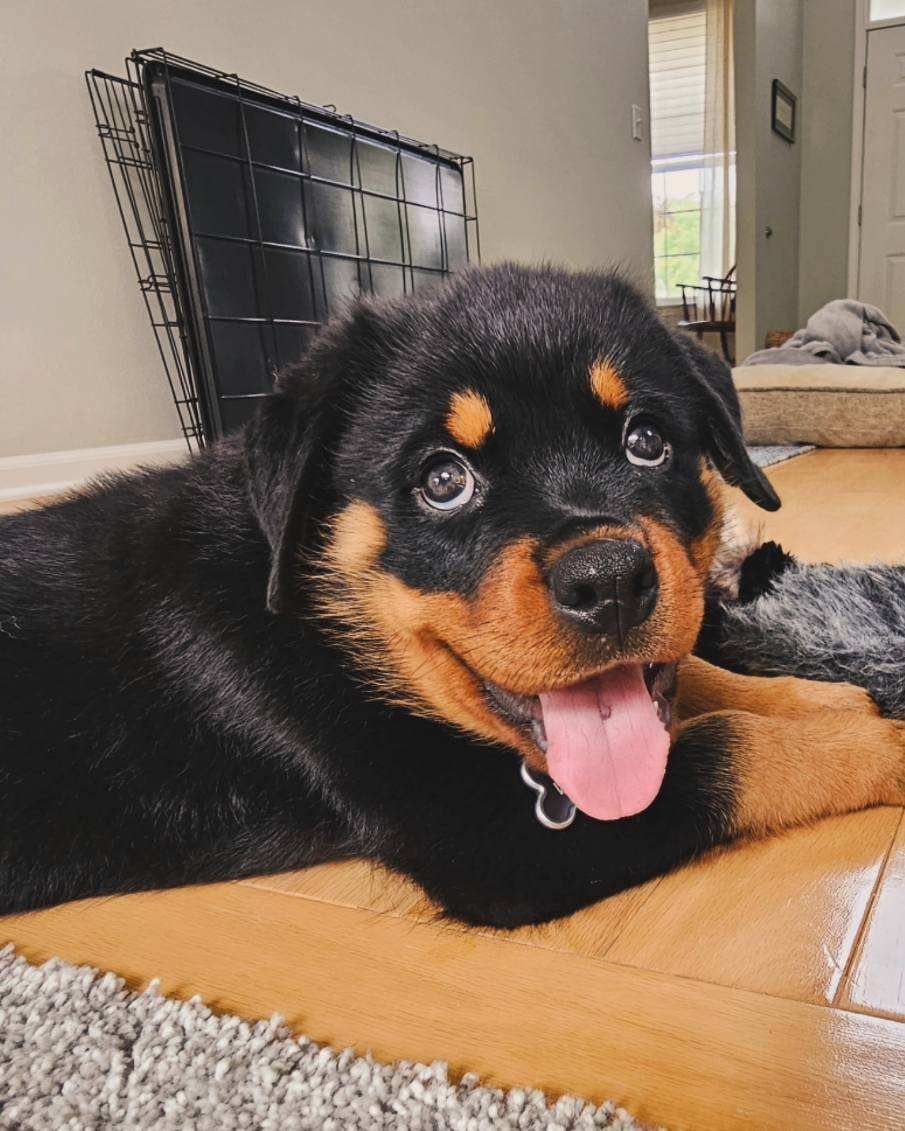
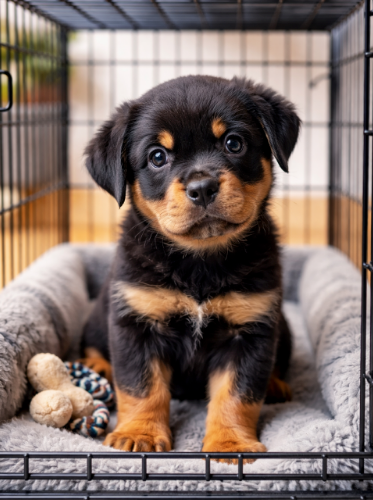
Time to Set Up Your Puppy’s Crate
Now is the time to get a crate (wire or plastic kennel). This will quickly become one of the most valuable tools you have.
A crate helps:
- Keep your puppy safe when you can’t supervise
- Prevent destructive habits
- Make house-training much easier and more consistent
And just as important — a crate is not a punishment. Dogs naturally seek out small, den-like spaces. When introduced correctly, the crate becomes a place where your puppy feels secure and relaxed.
Why Crate Training Matters Long-Term
Crate training isn’t just for the puppy stage—it sets your dog up for real-life situations:
- Traveling: Whether it’s a short trip or a long haul, a crate-trained dog travels calmer and safer
- Hotels or visiting family: Your dog already has a familiar, safe space in new environments
- Vet stays or boarding: If your dog ever has to stay overnight, being comfortable in a kennel dramatically reduces stress
- Recovery time: If your dog ever needs to be restricted after an injury or procedure, crate training makes this much easier on both of you
A dog that’s comfortable in a crate handles change, stress, and new environments far better.
Choosing the Right Size Matters
Be sure to select the correct size crate. If it’s too large, your puppy may use one end as a bathroom and the other for sleeping, which can slow down potty training.
A great option is a wire crate with an adjustable divider. This allows you to start with the right size space and expand it as your puppy grows.
👉 Crates this size or larger are perfectly fine — just make sure they include a movable divider.
Common Crate Training Mistakes (and How to Avoid Them)
Even a great tool like a crate can work against you if it’s used incorrectly. Here are the most common mistakes we see:
- Using the crate as punishment
If the crate is only used when your puppy is “in trouble,” they’ll start to fear it. The crate should always feel like a safe, positive place. - Giving too much space too soon
A crate that’s too large allows your puppy to potty on one end and sleep on the other. This will slow down or confuse house training. Use a divider to size it correctly. - Leaving the puppy in too long
Puppies have limited bladder control. If they’re forced to stay in the crate too long, accidents are inevitable—and that sets training back. - Letting the puppy out while whining or barking
If you open the crate while they’re making noise, you teach them that whining = freedom. Wait for a brief moment of quiet before letting them out. - No consistency
Crate training works best with a routine. Random timing and inconsistency will confuse your puppy and slow progress. - Skipping crate time when you’re home
If the crate is only used when you leave, your puppy can develop anxiety around it. Use it for short periods even when you’re home so it becomes normal. - Making it uncomfortable or uninviting
A crate should feel like a good place to be. A safe chew, feeding meals in the crate, and calm introductions all help build a positive association.
Watch My Crate Training Video Here: