
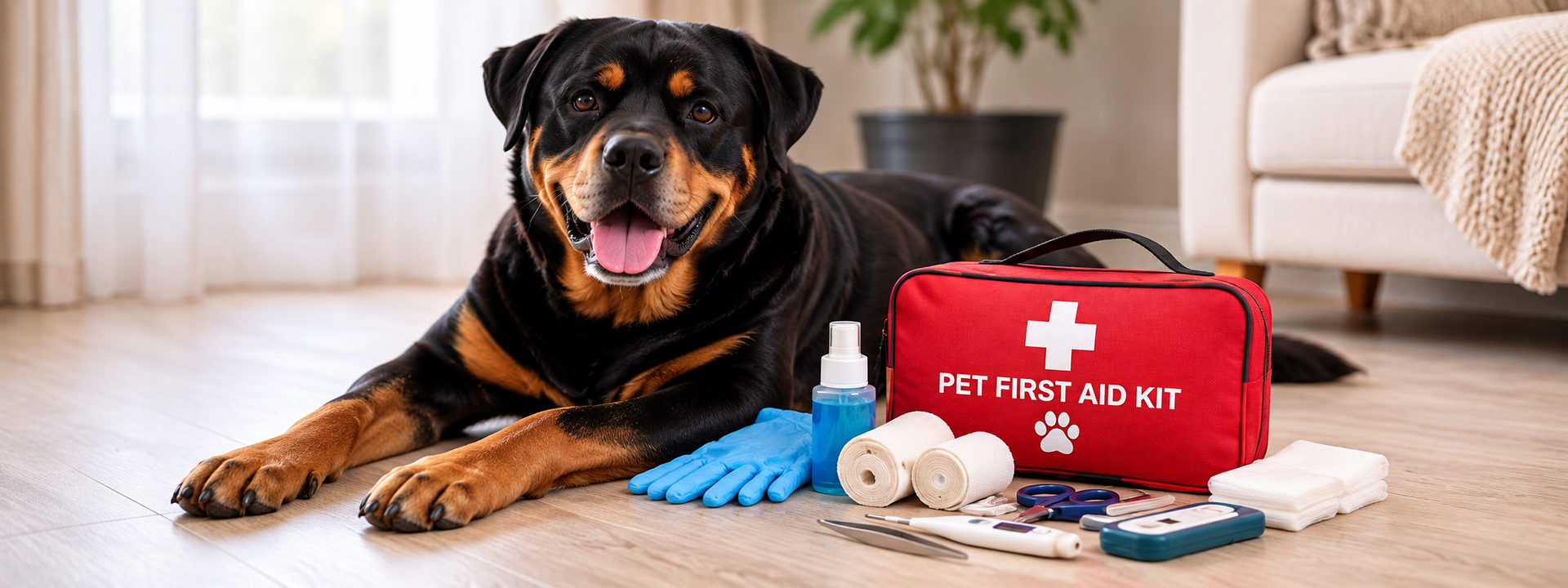
First-Aid Starter Kit
Every dog owner should keep a basic first-aid kit somewhere easy to grab. You don't need an entire veterinary clinic in your cabinet—just a few supplies that can help you handle a minor injury or safely get your dog to the veterinarian when something more serious happens.
First aid is just that—first aid. It is not a substitute for veterinary care.
What to Keep in Your First-Aid Kit
Wound Cleaning & Basic Care
- Sterile gauze pads — several sizes
- Non-stick wound pads
- Self-adhesive wrap (Vet Wrap)
- Medical tape
- Blunt-tip scissors
- Tweezers — for splinters or debris
- Disposable gloves
- Clean towels or washcloths
- Unscented baby wipes — handy for cleaning dirty paws, fur, and the skin around a mess
- Vetericyn Plus Antimicrobial Wound Care Spray — an easy, ready-to-use option for cleaning minor cuts, scrapes, and skin wounds
- Sterile saline eye wash or wound wash — for gently flushing dirt or debris from an eye or wound
- Instant cold pack
A note about saline: Don't use regular contact-lens cleaning solution. Some contact-lens products contain disinfectants or other ingredients. Look for a product specifically labeled sterile saline eye wash or sterile saline wound wash.
Restraint & Transport
Even the sweetest dog may react differently when frightened or in pain, so it's helpful to have:
- Slip lead or extra leash
- Muzzle or soft cloth for temporary restraint
- Clean blanket or large towel — for warmth, support, or helping move an injured dog
- Your veterinarian's contact information
- The address and phone number of the nearest emergency veterinary clinic
Never muzzle a dog that is vomiting or having difficulty breathing.
Poison & Toxin Emergencies
Keep this number somewhere you can find it quickly:
ASPCA Animal Poison Control Center
888-426-4435 — Available 24/7
If you think your dog has eaten something poisonous, do not automatically induce vomiting. Some substances can cause even more damage coming back up. Contact your veterinarian, emergency veterinary clinic, or Animal Poison Control for instructions.
If possible, save the package, label, medication bottle, plant, or other information about whatever your dog may have eaten.
Knowing exactly what your dog got into—and approximately how much—can be extremely helpful.
When It's More Than First Aid
Seek veterinary care immediately if your dog:
- Has heavy or uncontrolled bleeding
- Is having difficulty breathing
- Is having seizures
- Collapses or becomes extremely weak
- May have ingested a poison or toxic substance
- Has a serious or deep wound
- Appears to be in significant pain
- Has an injury or symptoms that concern you
When you're unsure how serious something is,
I'd much rather have you make the phone call than wait and wish you had.
A Special Note About Rottweilers
Rottweilers are big, muscular dogs, and sometimes an injury can look much smaller on the surface than it really is.
Pay particular attention to puncture wounds. A small opening in the skin doesn't necessarily tell you how much damage may be underneath.
If your Rottweiler has been bitten, punctured, or has a wound that appears deeper than a simple scrape, don't let the small size of the opening fool you. Have it checked.
One Last Tip
Put everything together before you need it. Keep your supplies in one clearly marked container or bag, and make sure everyone in your household knows where it is.
When something happens, that's not the time you want to be searching through three bathroom cabinets trying to remember where you put the gauze.