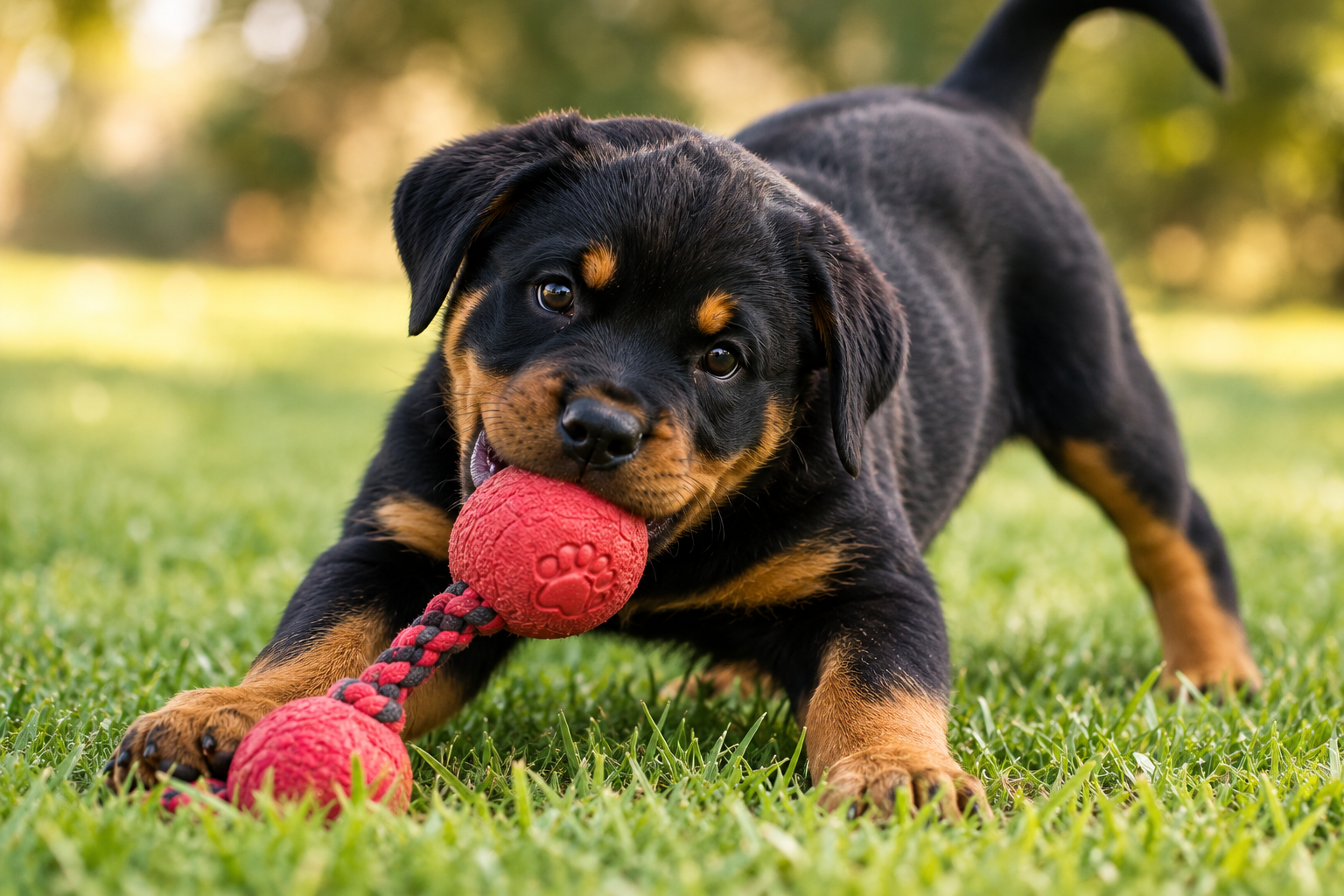
🐾 Pup Date: Why We Don't Encourage Rough Play with Puppies
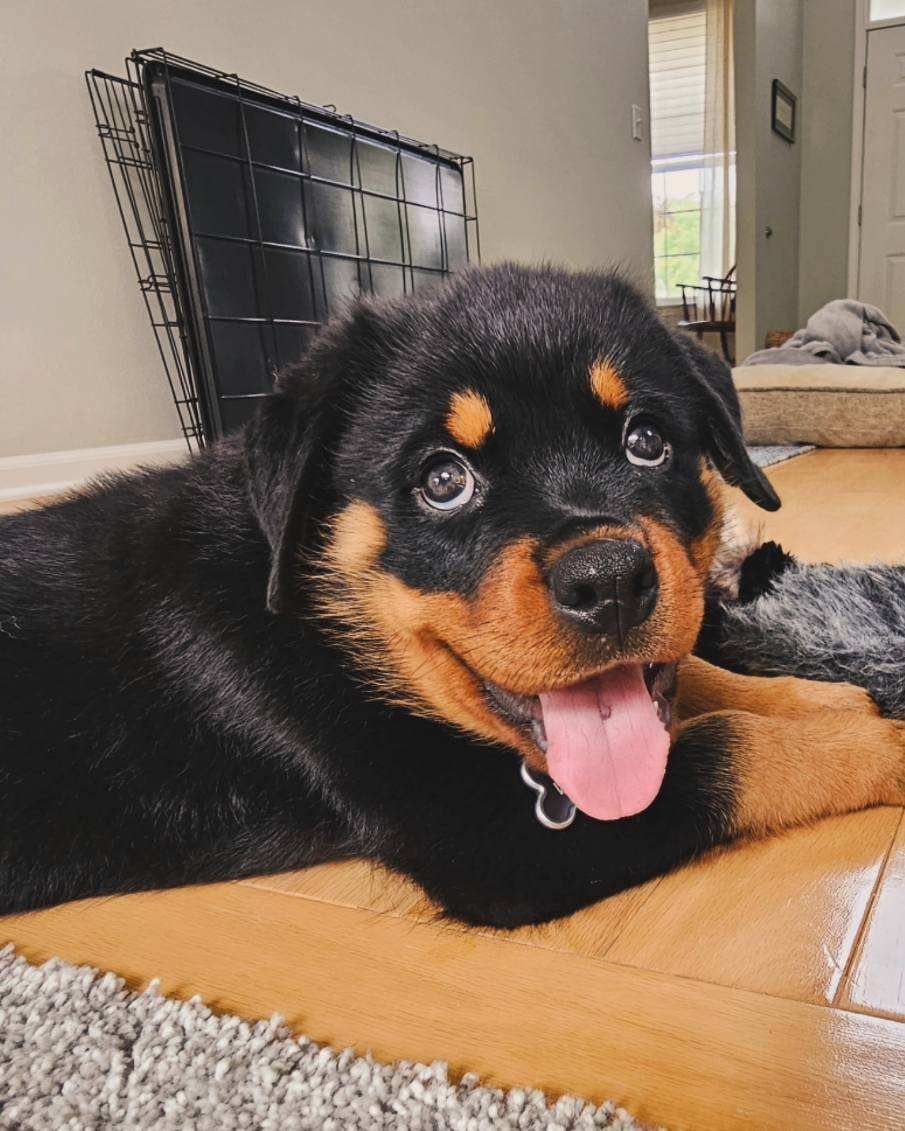
One of the cutest things a young puppy does is bounce around, grab at your hands, and try to wrestle. At eight weeks old, it's adorable. At 100 pounds... not so much. 😊
One of the goals during those first few months is teaching your puppy who they can play rough with—and who they can't.
Dogs naturally wrestle, bite, chase, and body slam each other. That's how they play with other dogs. But people aren't dogs. If we encourage that same kind of play with our hands, arms, or clothing, we're accidentally teaching our puppy that humans are wrestling partners too.
That doesn't mean your puppy shouldn't play. They absolutely should! They just need appropriate outlets for that energy.
Some great ways to burn off puppy energy are:
- 🐾 Toss a ball.
- 🐾 Take your puppy on a fast-paced walk around the yard—or even through the house.
- 🐾 Encourage them to carry a toy around the house.
- 🐾 Scatter a handful of their kibble in the grass and let them use their nose to find every piece.
- 🐾 Create a simple obstacle course using chairs, boxes, or broomsticks for your puppy to walk around, step over, and explore.
If your puppy grabs your hands or starts getting overly excited, calmly redirect them to a toy. If they ignore the redirection and come right back to biting your hands, I give a firm "No!" and a quick tap on the nose. Then the fun stops. They quickly learn that rough play with people doesn't get them what they want, but playing appropriately does.
One of my mottos is:
"We don't practice bad behavior."
Every time we allow a puppy to practice a behavior, they're getting better at it. That's why I don't play tug-of-war with my puppies or adult dogs. In my opinion, tug is a dominant-building activity. I don't want my dogs practicing pulling against me, challenging me over an object, or thinking it's a game to "win" something from me.
Instead, I want every interaction to reinforce calmness, self-control, and looking to me for direction. If I'm going to spend time playing with my dog, I want us to be practicing the behaviors I'll appreciate for the rest of their life.
This is especially important with a Rottweiler. They're naturally physical dogs. They love to lean on you, bump into you, and use their whole body. There's nothing wrong with that—as long as they also learn when to be gentle.
Another saying I live by is:
"What's cute at 10 pounds is NOT cute at 100 pounds."
The habits you build during these first few months are often the habits your dog will carry into adulthood. Be intentional. Every game you play, every interaction you have, and every correction you make is shaping the dog your puppy will become.
❤️ One day you'll have a powerful, confident adult Rottweiler. The training you're doing today is laying the foundation for the dog they'll be tomorrow.